DRAIN & SEWER HELP • COLUMBUS, OH
Sewer & Drain Cleaning Services in Columbus, OH
A slow or clogged drain can throw off your whole routine, especially when it keeps coming back no matter how many times you clear it. Drain cleaning Columbus, OH often starts with one stubborn sink or shower, but if several fixtures are backing up at once, or a toilet gurgles when the washing machine drains, the issue may be farther down the line than a single clog. That can point to a main sewer line problem rather than something isolated to one drain.
Plumber Columbus helps homeowners connect with local plumbing service contractors who handle everything from routine drain clearing to sewer backup situations. You don’t need to know the exact cause before you call just describe what’s happening and where, and the right next step can be figured out from there.
Don’t Ignore These Drain & Sewer Warning Signs
One slow drain may just be one slow drain but recurring clogs or multiple affected fixtures can point to a deeper drainage issue.
✓ Slow or standing water in sinks, tubs, or showers
✓ Kitchen or bathroom drains that keep clogging
✓ Gurgling toilets or multiple drains backing up together
✓ Persistent drain or sewer-type odors
✓ Basement or floor drain backups
Not sure if it’s one drain or something bigger? Describe the symptoms that’s enough to start.
Local Columbus Focus
Service requests centered on Columbus, OH
Clear Next Steps
Explain the symptoms and service needed
Drain & Sewer Support
From fixture clogs to main-line concerns
Easy to Reach
Call or send a service request
The problem usually starts small
Drain Problems Can Get Worse Quickly
Most drain problems don’t appear out of nowhere. Before a full blockage or backup happens, there are usually warning signs: water draining more slowly than usual, a clog that keeps coming back, gurgling sounds from a nearby fixture, or a faint drain odor that wasn’t there before. These symptoms can be a sign of restricted flow somewhere in the drainage system. Depending on where that restriction is located, the fix can range from clearing a single fixture to addressing a shared branch drain.
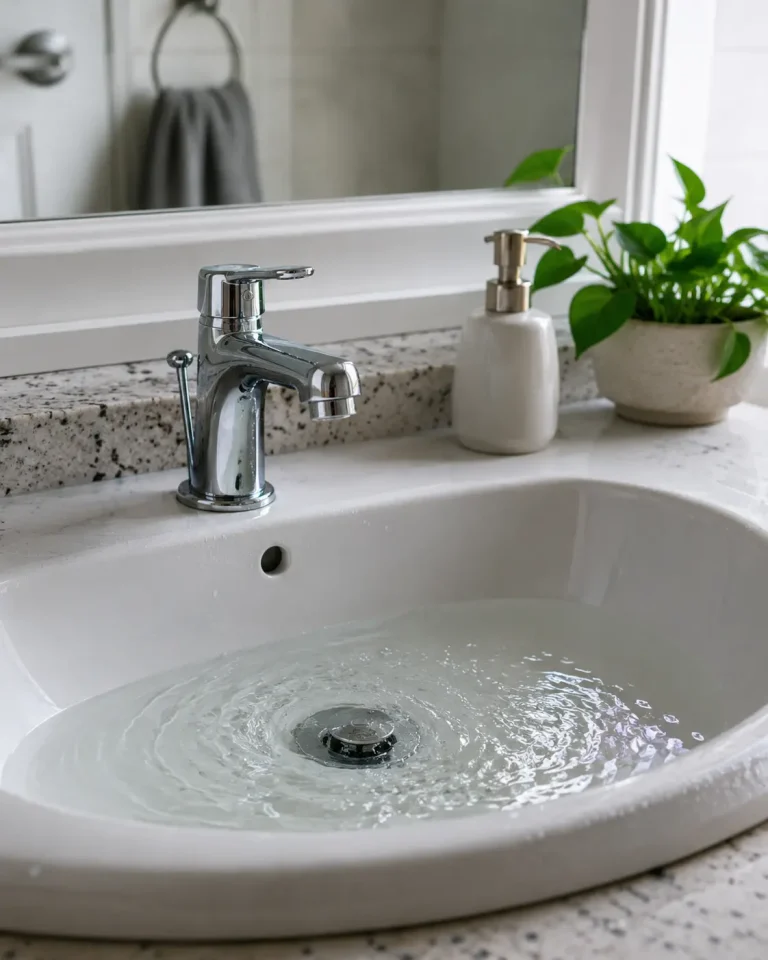
Slow Drains
A drain that empties a little slower each week isn’t just an inconvenience it can mean material is building up along the inside of the line. Left alone, this kind of drain line buildup tends to narrow the passage further until the drain stops working altogether. Slower drainage is often one of the earliest signs something is developing.
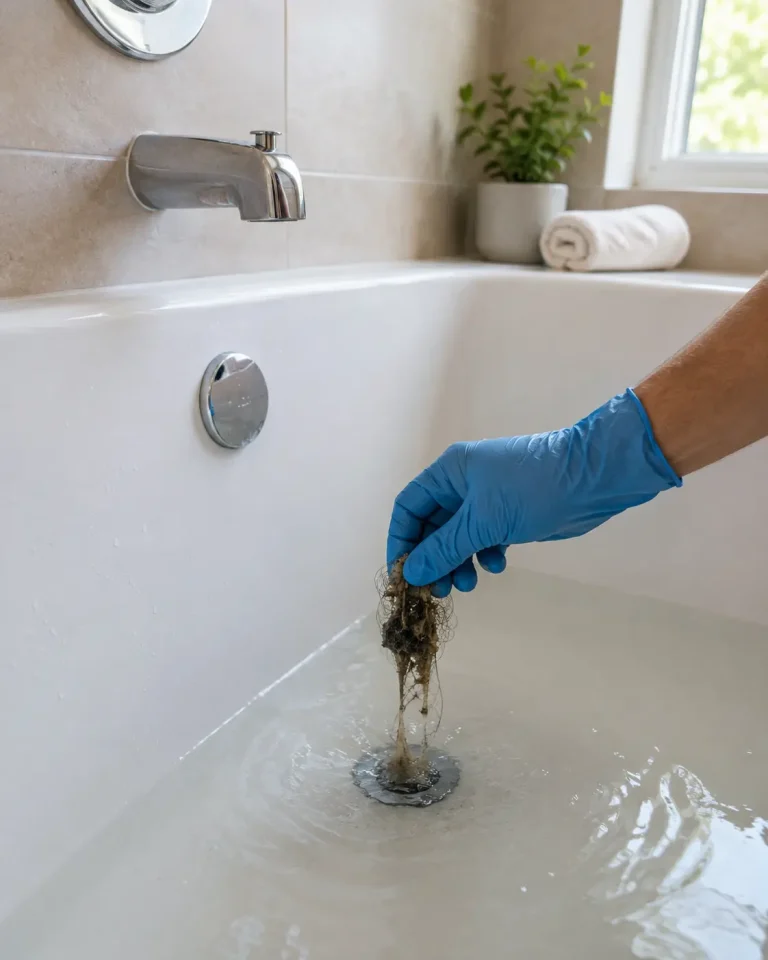
Recurring Clogs
If the same sink, tub, or shower keeps clogging even after you’ve cleared it, the underlying restriction may not have been fully resolved the first time. A recurring drain clog in the same spot is worth paying attention to it can mean the blockage is only partially cleared, or that something further down the line keeps causing it to return.
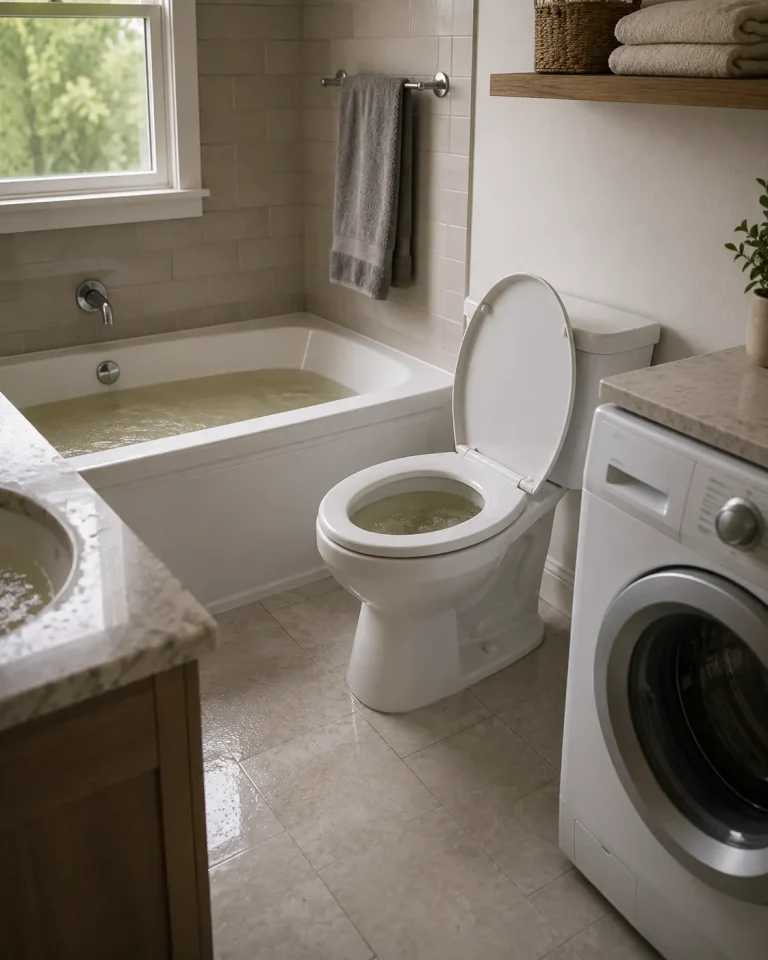
Multiple Backups
A single slow or clogged fixture is often isolated to that drain. But when two or more drains slow down or back up around the same time say, a toilet gurgles when the washing machine runs, or a tub backs up when the sink is used it can point to a restriction farther downstream, in a shared branch drain or even the main sewer line. This pattern usually calls for a closer look rather than a simple fix at one fixture.
Not sure whether it’s “just a clog”? You don’t have to figure that out on your own. A few details go a long way: which fixture is affected, whether more than one drain is involved, whether the problem keeps coming back, and whether you’re seeing standing water or an actual backup. Sharing those details helps determine whether the issue looks isolated or whether it may call for a deeper drain or sewer evaluation.
Drain Cleaning Columbus, OH
Drain Cleaning for Kitchens, Bathrooms & More
Not every clogged drain has the same cause. A kitchen sink, a bathroom shower, and a basement floor drain each collect different kinds of buildup, and where the slowdown is happening often says a lot about what’s going on. One slow fixture may just need clearing. But if the same drain keeps backing up, or the symptoms show up in more than one place, it may point to something further along the line that needs a closer look. Drain cleaning in Columbus, OH starts with figuring out which of these you’re dealing with.
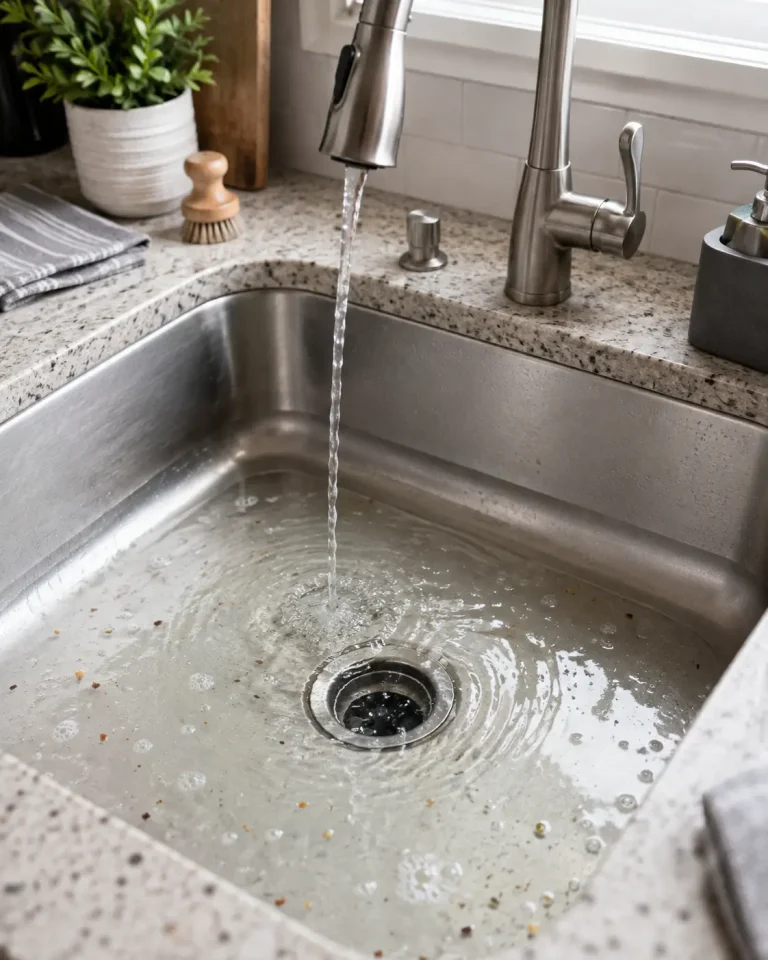
Kitchen Drain Cleaning
A kitchen sink that drains slowly, fills up while the water is running, or keeps clogging in the same spot is a common complaint. Kitchen drain lines can accumulate grease, cooking residue, food particles, and soap over time, and this buildup may contribute to a restriction that keeps coming back even after a quick fix. A lingering odor near the sink can be another sign that material has built up inside the line rather than just sitting at the drain opening.
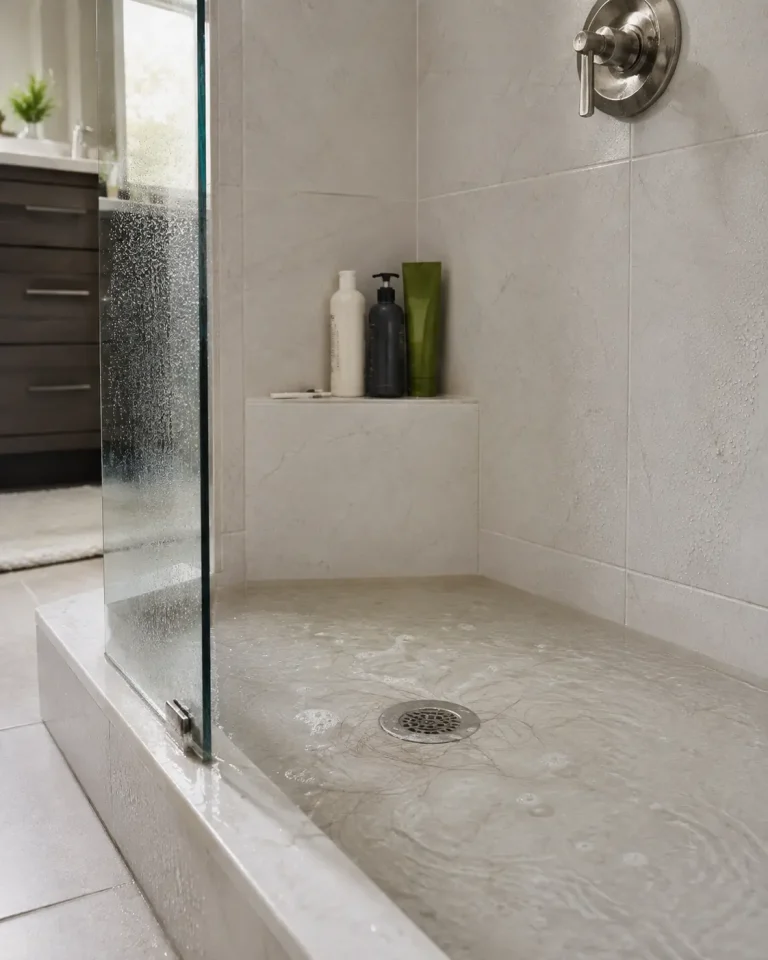
Bathroom Drain Cleaning
Bathroom sinks, showers, and tubs tend to slow down for different reasons than kitchen drains. Hair, soap residue, and everyday personal-care products can collect inside the line, gradually narrowing the passage until water starts pooling around your feet in the shower or a sink takes noticeably longer to clear. If a bathroom drain keeps slowing down after being cleared, the material causing the restriction may not have been fully removed the first time.
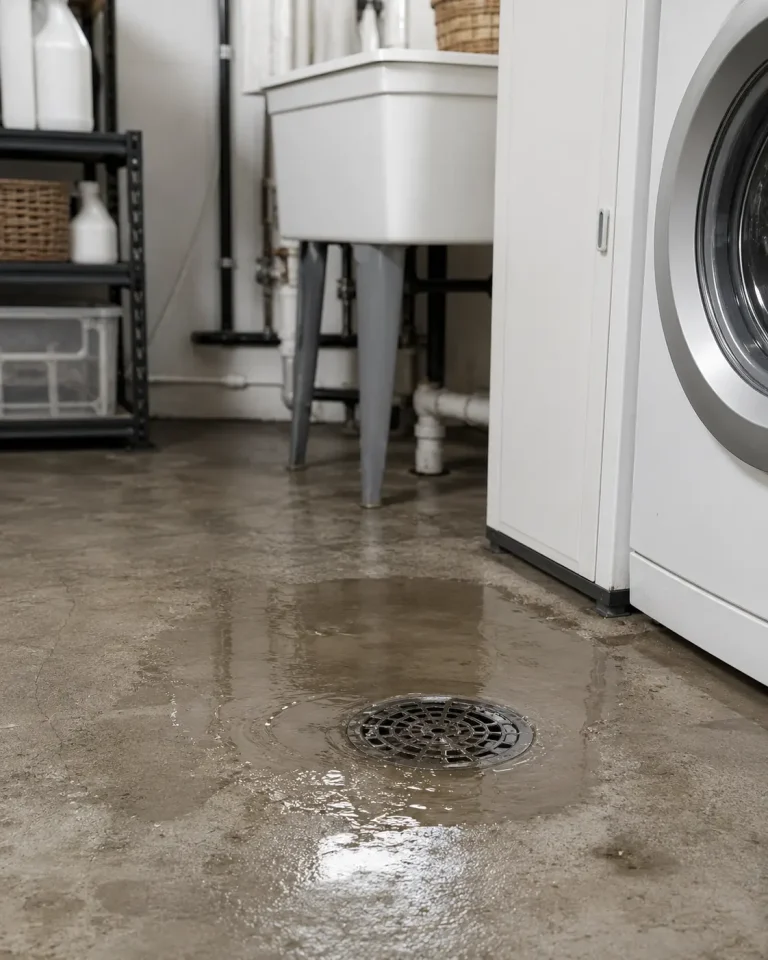
Floor & Utility Drains
A basement or utility floor drain is usually one of the last places water shows up which is exactly why it’s worth paying attention to. If water starts pooling near a floor drain, or a laundry drain backs up during a wash cycle, it can point to a restriction in a shared drain line rather than something isolated to that one drain. This kind of backup may warrant a closer look at what’s happening farther down the system.
When the Problem Goes Beyond One Drain
Main Sewer Line Cleaning in Columbus, OH
A single slow sink, tub, or shower is often isolated to that fixture or the branch drain feeding it. But when the slowdown shows up in more than one place at the same time, the restriction may be located farther down the system closer to, or inside, the main sewer line. That distinction matters, because clearing one fixture won’t resolve a problem that’s actually happening downstream. If more than one drain is affected, it’s worth treating it as a main drain question rather than a single-fixture clog.
Some patterns are worth paying closer attention to. A toilet that gurgles when the washing machine drains, water that rises in a tub or floor drain when another fixture runs, or several drains slowing down around the same time can all point to shared drainage rather than one isolated clog. So can a backup that clears temporarily and then returns within days or weeks. On their own, any one of these could have a simple explanation but together, they tend to describe a downstream restriction rather than a problem with a single sink or shower.
What happens next depends on where the restriction actually is and what’s causing it. A blockage confined to the main line may respond to main line clearing or sewer line cleaning, while a problem that keeps coming back may call for a closer look sometimes with a sewer camera inspection to see what’s actually happening inside the line. Either way, main sewer line cleaning in Columbus, OH typically starts with understanding which fixtures are affected and how the symptoms are behaving over time.
Signs the Problem May Be Deeper
Know the warning signs
Common Signs of a Drain or Sewer Problem
Drain and sewer problems rarely happen without warning. Water may drain more slowly than it used to, a clog may keep coming back, or a toilet might gurgle for no obvious reason. Odors, standing water, and several drains acting up at once are other signals worth noticing. One of these on its own may be isolated and easy to resolve. But recurring symptoms, or more than one showing up together, can be a warning sign that the restriction is farther inside the drainage system than it first appears.
Slow Drainage
Water that takes progressively longer to leave a sink, tub, or shower is often the first noticeable sign that normal flow is being restricted somewhere in the line. It’s easy to dismiss at first, but it rarely improves on its own.
Frequent Clogs
When the same fixture clogs again shortly after being cleared, something may still be restricting flow farther inside the line. A recurring drain clog in one spot is a pattern worth paying attention to, not just a one-time inconvenience.
Gurgling Sounds
Unusual bubbling or gurgling from a toilet, sink, or drain can happen when air and water aren’t moving through the system the way they normally would. It’s often noticed right when another fixture is being used nearby.
Drain Odors
A persistent smell coming from a drain may be associated with trapped debris, buildup inside the line, or another drainage issue. An odor that keeps returning after cleaning is generally more telling than a one-time smell.
Standing Water
Water that lingers in a sink, shower, tub, or floor drain instead of clearing normally is a clear sign that flow is restricted. If it keeps happening in the same spot, it may need closer attention.
Multiple Backups
When more than one fixture slows down or backs up around the same time, the restriction may be sitting in a shared drain line rather than in just one fixture. This kind of pattern tends to point to a deeper drainage issue.
What may be causing it?
Common Causes of Clogged Drains & Sewer Lines
The same symptom can have different underlying causes. Two homeowners might both describe a slow kitchen sink, but one could be dealing with buildup inside the pipe while the other has a root or a structural issue farther down the line. A restriction may develop from material collecting inside a drain, an object lodged in the line, or a problem with the pipe itself cracks, roots, or movement in the ground around it. Recurring or widespread problems may deserve a closer look, since repeatedly clearing a symptom doesn’t always address what’s actually causing it.
Grease & Organic Buildup
Cooking grease, oils, food residue, and soap can gradually coat the inside of a kitchen drain line. As more material sticks to the pipe walls, the usable opening narrows and water starts draining more slowly than it used to. Once that layer of buildup is there, other debris tends to catch on it, which is part of why kitchen drains affected this way often develop a recurring clog rather than a one-time blockage.
Hair, Soap & Everyday Debris
Bathroom sinks, tubs, and showers collect a different mix — hair, soap residue, and personal-care products that combine and cling to the inside of the pipe. On their own, small amounts usually pass through without issue. Over repeated use, though, this material can build into a restriction farther inside the line, which is often why a bathroom drain problem starts as mild slow drainage and gradually gets more noticeable.
Foreign Objects
Items that shouldn’t go down a drain anything from small solid debris to inappropriately flushed products can become physically lodged in a trap, fixture drain, or branch drain. Unlike buildup, an object caught in the line usually isn’t something that clears on its own with repeated use or attempted flushing. If a drain resists clearing despite multiple attempts, something may be obstructing the line rather than simply coating it.
Tree Root Intrusion
Sewer lines aren’t always perfectly sealed, especially at joints or in sections that have cracked or shifted slightly over time. Tree roots can find their way into these small openings while searching for moisture, and once inside, they tend to grow and expand, catching waste and debris as water moves through. What starts as a minor intrusion can gradually restrict flow and contribute to a blockage that keeps returning even after the line has been cleared.
Aging or Damaged Pipe
Pipes can crack, deteriorate, or partially collapse over time, particularly in older sections of a drain or sewer system. This matters because cleaning a line addresses what’s inside the pipe it doesn’t correct damage to the pipe itself. When a blockage keeps recurring in the same section despite being cleared, the pipe’s condition may be a factor worth looking into rather than just what’s accumulating inside it.
Pipe Movement or Misalignment
Ground settling, soil conditions, or existing defects in a pipe can gradually shift its position, slope, or alignment. A low point or an offset joint can interfere with normal flow and give debris a place to collect even in an otherwise clear line. Because this kind of issue is structural rather than a simple obstruction, it can be harder to identify from symptoms alone a camera inspection is sometimes used to evaluate what’s happening inside a line when a problem keeps recurring without an obvious cause.
The right tool depends on the problem
Drain Cleaning Methods
Not every clog calls for the same response. Whether snaking, hydro jetting, or a camera inspection makes sense depends on where the restriction is, what seems to be causing it, and whether the problem is a one-time clog or something that keeps coming back. A localized obstruction may respond well to a drain snake, while buildup coating more of the line may call for hydro jetting instead.
When the cause isn’t clear, or a main-line problem keeps returning, a camera inspection can help evaluate what’s actually happening inside the pipe before deciding on next steps. Drain cleaning in Columbus, OH often starts with matching the right approach to the right problem.
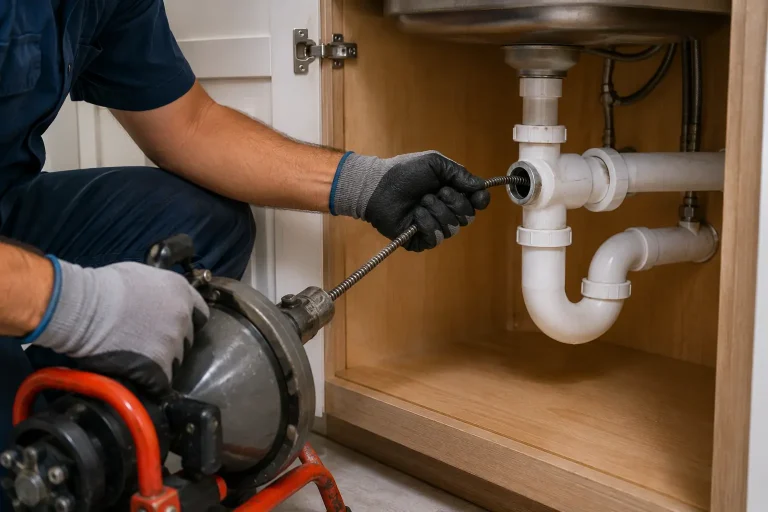
Drain Snaking
A drain snake, or cable, is fed directly into the drain line to reach a blockage. Depending on what’s causing the obstruction, it may break through the material, pull it free, or otherwise disturb it enough to restore normal flow.
Drain snaking in Columbus, OH is often considered for a localized drain line obstruction a single clogged fixture rather than a line coated with buildup along its length. It’s worth knowing that snaking clears a path through an obstruction; it isn’t the same as cleaning the full interior surface of a pipe. If a clog clears temporarily but keeps returning, that can be a sign that something beyond a simple obstruction is involved, and a different kind of evaluation may be worth considering.
Hydro Jetting
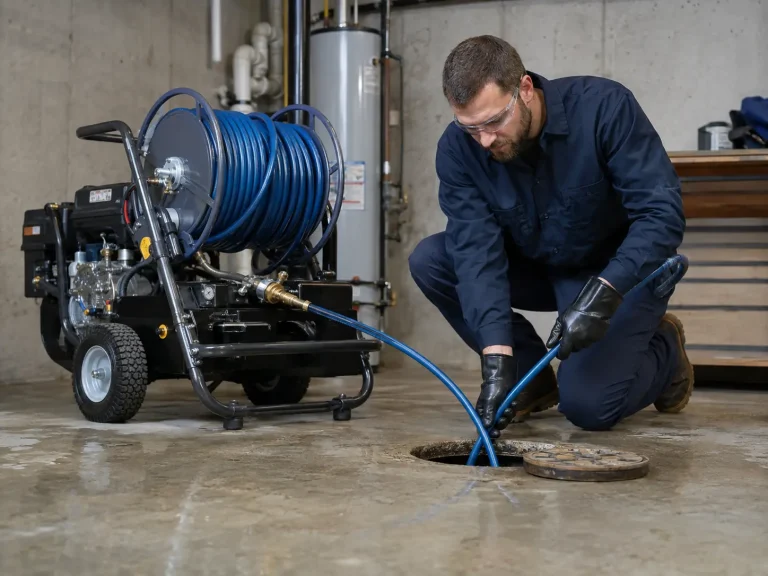
Hydro jetting uses pressurized water to clean material from the interior of suitable drain or sewer piping, rather than just pushing through a single obstruction. It’s typically considered when buildup grease, sludge, or other organic material is coating more of the inside of the line, not just blocking one section.
Hydro jetting in Columbus, OH may be appropriate depending on the condition of the piping and the nature of the restriction; older, damaged, or already-compromised pipe may not be a good candidate. It isn’t a universal fix for every blockage, and it isn’t automatically the better option compared to snaking the right choice depends on what’s actually happening inside that specific line.
Sewer Camera Inspection
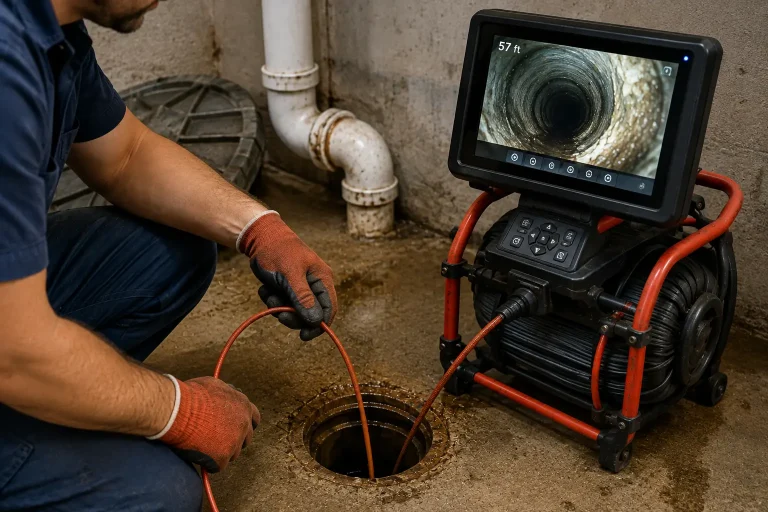
A sewer camera inspection uses a small video camera to visually examine accessible portions of a drain or sewer line. Rather than clearing anything, its role is diagnostic helping identify what’s actually causing a problem before deciding how to address it. A video pipe inspection can be useful for evaluating a recurring blockage, suspected tree root intrusion, a damaged or deteriorated pipe, or a main-line problem that isn’t fully explained by the visible symptoms.
Sewer camera inspection in Columbus, OH is often considered when a problem keeps returning despite clearing, or when the cause of a backup isn’t obvious from the symptoms alone. A camera inspection won’t necessarily identify every possible issue, but it can rule out or confirm several likely explanations.
When cleaning may not be enough
Sewer Line Repair & Replacement
Not every sewer blockage is only about material that needs to be cleared. Sometimes the pipe itself contributes to the problem a crack, a shifted section, a joint that’s separated slightly, or tree roots that have made their way inside. When the physical condition of the line is part of what’s restricting flow, clearing the blockage may bring things back to normal temporarily without addressing what caused it in the first place. That’s usually the situation behind a damaged sewer pipe that keeps producing the same backup even after it’s been cleared.
Repair and replacement aren’t the same decision, and one isn’t automatically the answer just because a blockage has returned. What makes sense depends on where the damage is, how extensive it is, and the condition of the surrounding pipe. In some cases, a damaged section can be repaired on its own. In others, more widespread deterioration may mean replacement is worth considering. Sewer line repair in Columbus, OH typically starts with understanding what’s actually happening inside the line not with assuming the worst before that’s known.
Recurring sewer backups?
If the same backup keeps coming back after being cleared, it may be worth finding out why before continuing to treat just the blockage. A recurring sewer backup doesn’t automatically mean the line needs to be replaced but it can be a reason to look closer at what’s causing it to return.
What happens after you call?
A Simple Sewer & Drain Service Process
1
Tell Us the Symptoms
You don’t need to know what’s causing the problem before you call just describe what you’re seeing. That might include which fixture is affected, how long it’s been happening, whether more than one drain is involved, and whether water is backing up or just draining slowly. Those details are enough to get started on a drain or sewer problem.
2
Connect With Local Help
Based on what you describe, your request may be connected with an independent local plumbing service contractor serving the Columbus area. Which contractor you’re connected with can depend on factors like the type of problem, your location, and contractor availability. A match isn’t guaranteed, but the goal is to connect you with someone equipped to look into it.
3
Evaluate the Problem
Once connected, the contractor can evaluate the symptoms and get a clearer picture of what’s happening. Depending on what they find, that might involve drain clearing, further inspection, or a closer look at the sewer line. What approach makes sense depends on the cause that’s determined during the evaluation, not before it.
4
Review the Next Step
Before any work begins, you should have a clear picture of what’s being recommended and why. That includes discussing the scope of the work, pricing, and any applicable service terms directly with the contractor. You’re not obligated to move forward until you understand what’s involved the decision to authorize the work is yours.
Homes & businesses
Drain Cleaning for Columbus Homes & Businesses
Residential Drain Cleaning
Household drains all serve different daily routines, and a problem with one doesn’t always look the same as a problem with another. A slow kitchen sink might just be an annoyance until dishes start piling up. A shower or tub that backs up can throw off a morning routine fast. A laundry drain that’s slow to clear can interrupt wash day, and a basement floor drain holding water is easy to miss until it’s already a bigger problem.
Residential drain cleaning in Columbus, OH covers all of these areas kitchens, bathrooms, laundry connections, basement and floor drains, and, when the problem goes beyond one fixture, the main sewer line. You don’t need to figure out which of these applies to your situation before reaching out just describe what’s happening and where.
Commercial Drain Problems
Drain and sewer problems affect commercial properties differently than homes, mostly because there’s less room for downtime. A slow floor drain in a restaurant kitchen or a backed-up restroom line in an office or retail space isn’t just inconvenient it can affect employees, customers, or tenants right away.
Commercial drain cleaning in Columbus, OH applies to a range of property types, including offices, retail spaces, restaurants, and rental properties, each with different fixtures and usage patterns. Recurring clogs or multiple affected drains in a commercial setting can point to a larger drainage issue, similar to what happens in a home, but the impact on daily operations often makes the problem harder to ignore.
Local service area
Sewer & Drain Help Across Columbus, OH
Plumber Columbus focuses primarily on connecting homeowners and property owners in Columbus, Ohio with independent local plumbing service contractors for drain and sewer problems. Whether it’s a single slow drain, a recurring clog, or concerns about the main sewer line, requests are typically directed toward contractors familiar with drain cleaning in Columbus, Ohio. Depending on contractor availability, requests from nearby communities may also be supported though coverage can vary by location and by the specific plumbing problem involved.
Columbus
Dublin
Westerville
Gahanna
Reynoldsburg
Upper Arlington
Worthington
Hilliard
Grove City
Need Help Deciding What to Do?
Not sure if you’re dealing with one clogged drain or something bigger like several fixtures backing up, a basement floor drain holding water, or a blockage that keeps returning? You don’t need to know the exact cause before reaching out. Just describe what’s happening, which fixtures are affected, and how long it’s been going on.
Clogged Drain? Sewer Backup? Don’t Keep Guessing.
You don’t have to identify the cause yourself. Let us know whether it’s one drain or several, and whether the problem is new or something that keeps coming back. That’s enough to get started with drain and sewer help in Columbus the next step can be figured out from there.
☎ Call +1 (380) 246-9005
Frequently asked questions
Drain Cleaning FAQs for Columbus, OH
Important Notice: Emergency Plumber Columbus is a free service that helps homeowners connect with independent local plumbing contractors. Contractors are independent. Customers are responsible for verifying licensing, insurance, qualifications, pricing, warranties, and other requirements before hiring.